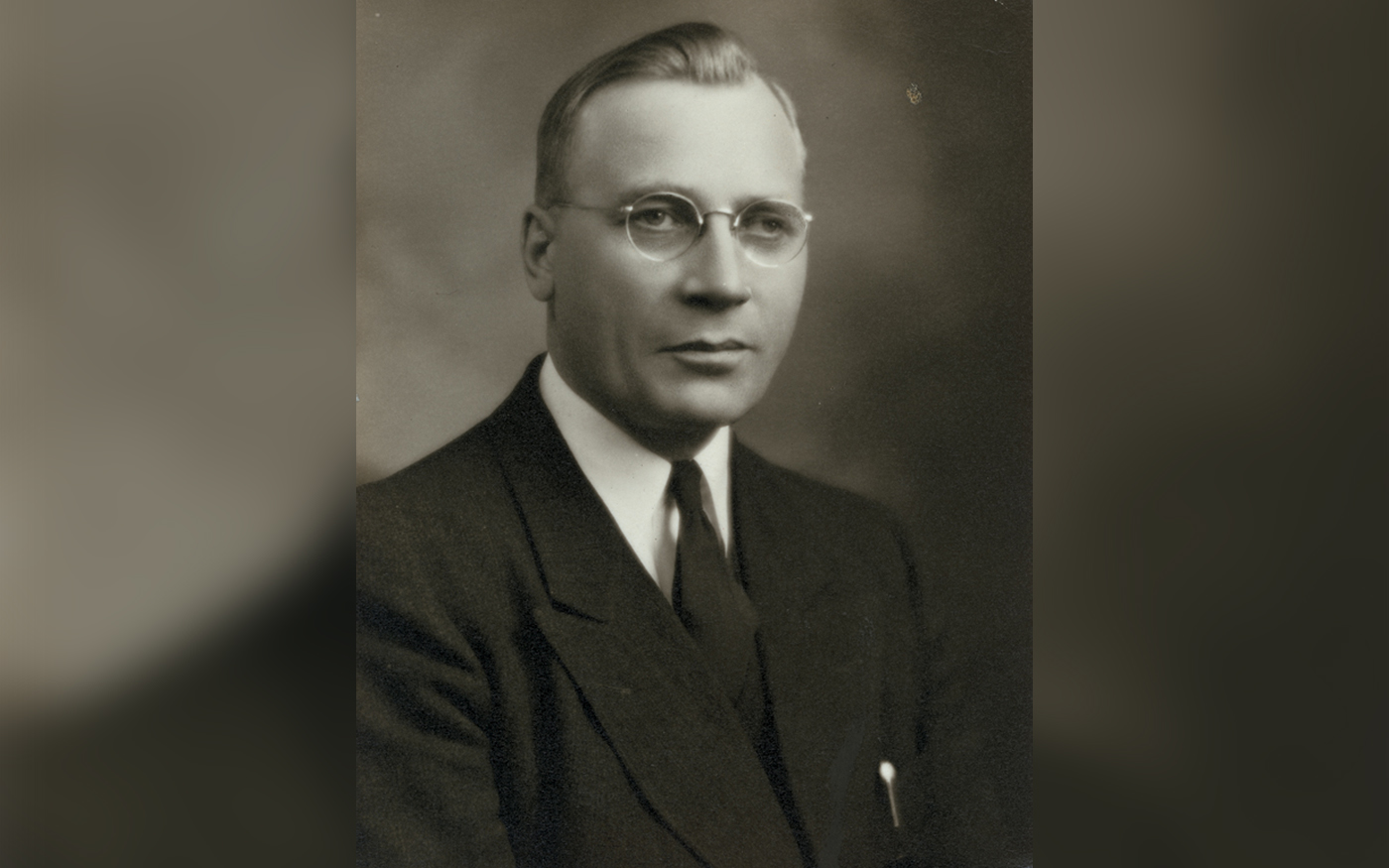
This Week in AG History — June 17, 1979
Born to Swedish Baptist parents near Regan, North Dakota, Johnson accepted Christ as his Savior at the age of 11. Recognizing his dedication and natural leadership, his church appointed him as clerk when he was just 13. In the 1920s, when the Pentecostal message reached the Regan area, the Johnson family joined a revival that brought many into the experience of Spirit baptism, including Herman, who received the baptism in the Holy Spirit with the evidence of speaking in tongues.
At 26, Johnson felt a clear call from God to devote the rest of his life to Pentecostal ministry. He began preaching in small towns, often traveling by bobsled to reach remote congregations. His leadership potential quickly became evident, and within a year he was elected secretary/treasurer of the newly formed North Central District of the Assemblies of God.
In 1924, evangelists brought a small group of believers in Kulm, North Dakota, into the Pentecostal faith, and Johnson became their first pastor. Like many pastors of the era, who pioneered "outstations" in nearby towns, he started a preaching point in Lisbon, North Dakota.
In 1927, Johnson married Ellen Ackerson. Together they pastored churches in Minot and Bismarck. Early in their ministry, they made a vow to follow God’s call wherever it led, never asking about financial support. Though this often meant hardship, they never wavered in their commitment.
When the expansive North Central District (comprising the Dakotas, Minnesota, Montana, and Wisconsin) was divided for more effective ministry, Johnson was elected the first district superintendent of the new North Dakota District (now Ministry Network) in 1936. His appointment was announced in the district periodical, which noted the new superintendent “will be expected to travel constantly” — a responsibility Johnson embraced wholeheartedly.
At the time, the North Dakota District included only a handful of churches, often separated by long, difficult travel — especially in winter. Johnson’s reports in the district newsletter reveal a full and demanding schedule: visiting congregations, encouraging pastors, filling pulpits, scouting locations for new churches, securing properties, and recruiting pastors. By the time he stepped down as superintendent, the district had grown to over 60 churches, with Johnson frequently serving as an interim pastor to help new congregations get established.
A visionary leader, Johnson believed the district needed its own campground. He secured property at Lakewood Park in Devils Lake. A report from the 1938 camp meeting noted the surprising turnout despite drought conditions: “Devils Lake is aptly named, for it is drying up and as far as we know no fish live in its waters — but, praise the Lord, the enemy cannot prevent the Latter Rain from falling, for we experienced showers of spiritual rain.”
He also founded a Bible training school at Lakewood Park, which later became Trinity Bible College and Graduate School (now located in Ellendale, North Dakota). When the General Presbytery encouraged the Assemblies of God to care for the elderly, Johnson led the North Dakota District in establishing nursing homes. After retiring from district leadership, he even served as administrator of the Carrington home.
After leaving the district office in 1951, Johnson returned to the pastorate, leading churches in Jamestown, New England, and Mandan, and managing the Carrington retirement center. In their 70s, Herman and Ellen moved to Washington State and took on a new ministry as visitation pastors — continuing into Herman’s 90s, long past the age when most retire.
Amid their leadership responsibilities, Herman and Ellen raised six children — five sons and a daughter. In the June 17, 1979, Father’s Day issue of the Pentecostal Evangel, their son Clayton wrote: “I have seen the callouses of Christ on his tough yet gentle hands — the carpenter’s hands that fashioned a score of churches across the American prairie and shaped six lives at home.” Another son, David, added: “In all these years we have never heard them argue. Each lives for the other, and together for God.” Many years later, Daniel said of his father: “He was not well-known, not in this world. No park or boulevard bears his name. But I am grateful for a father who taught us to look at life like the Colorado homeowner, fire racing toward his house: ‘What should I take and what really matters.’”
In addition to their impact on the North Dakota District, the Johnsons left a lasting legacy to the Assemblies of God in their family. Sam Johnson became a long-term missionary and Joseph preached around the world as an evangelist. The legacy came full circle when their pastor son, Daniel, then himself age 90, was invited to preach the 100th anniversary service at the church his father founded in Kulm. The legacy continues through their grandchildren, who have built schools in Africa and India, led ministries for homeless teens, and served in active ministry roles alongside their spouses — furthering the kingdom of God.
Read the Father’s Day tribute to Herman Johnson, “He Struck A Light in Unnumbered Lives,” on page 4 of the June 17, 1979, issue of the Pentecostal Evangel.
Also featured in this issue:
• “What Shall I Do for My Son,” by Dan Betzer
• “A Theology of Ministry,” by Ronald Cottle
• “What to Do at the Breaking Point,” by Homer Keener
And many more!
Click here to read this issue now.
Pentecostal Evangel archived editions courtesy of the Flower Pentecostal Heritage Center.